
Intuitive Analytics

Intuitive Analytics works to free financial analysts and decision makers from the limitations of available software.

Subscribe by Email

Your email:

Current Articles | RSS Feed RSS Feed

Financial Decision Making: 3 Questions Every CFO Must Ask and Answer

  | Share on Twitter Twitter | Share on Facebook Facebook | Buzz This  Google Buzz | Submit to Digg digg it |  Add to delicious  delicious |  Submit to StumbleUpon StumbleUpon |  Share on LinkedIn LinkedIn | Submit to Reddit reddit 

Fork in road

Credit markets are certainly not “normal” (in any sense of the
word) but at least they’re stable enough for issuers to make some decisions. That said, keeping in mind the answers to three deceptively simple yet vitally important questions will always serve CFOs, governing boards, finance committees, and other financial decision makers very well.

Notice that these questions are not framed in terms of some specific risk metric or probability. That’s because they are intended to address decision making in a way that we (as a species) are best suited to understanding. Despite the fact that banking regulation has often focused on extremely remote events like 99.9% annualized confidence intervals i.e. events that happen every 1,000 years, it’s a well researched fact that we human types simply don’t do very well making decisions about such tiny likelihoods. We tend to overemphasize the dramatic remote risks (shark attacks and plane crashes) over the far more dangerous yet mundane occurrences (auto accidents and drowning).   

Can we make it through the worst plausible scenario?

The nature of risk management comes first in defining a plausible event or set of events to be concerned about. Without some sense for what that the downside concern is and how it will impact a corporation’s financial position, risk management doesn’t exist. Notice that this is where the entity’s level of risk aversion comes explicitly to the surface.

“Make it through” will mean different things to different entities since incentives and consequences, including political fallout, are obviously not uniform across institutions. For many, this concept is tied to liquidity access – a topic that’s found a great deal of interest over the last 18 months.

“Plausible” is also an important word here. An issuer I know, when answering this question for themselves, looked at the marks on their swaps if the entire yield curve moved to 0%. This is obviously a definable event and it gives one boundary value for their swaps; some people may consider it so implausible however that it should not be the focus in response to this question.  

How much might we gain in the best plausible scenario?

This is an important question in that if there’s very little gain expected relative to the “do nothing” scenario, absorbing the risk may not be worth it. This question wraps in it whether you want to evaluate the best scenario in terms of the individual transaction in isolation, or evaluate the overall impact against the backdrop of the entire portfolio (debt and/or investment).

The answer to this question in conjunction with the first helps determine the nature of the strategy’s distribution. A remote but large downside with a modest but likely upside is similar to a “sold option” situation. A fairly uniform upside and downside is a simple long position in some risk, etc. 

What is the breakeven?

How far do the factors that affect the performance of the instrument(s) need to move in order for the strategy to break even with the “do nothing scenario”? For instance, do you want exposure to SIFMA based variable rates as a tax-exempt borrower if you believe significant inflation will arrive eventually and you can lock in a rate at 3.75% fixed? How fast to floating rates need to rise for this strategy to break even (download model here)?

Understanding the break even helps us evaluate the likelihood that the transaction will work in your favor in a way that no other calculation really does. It allows us to directly assess a tangible, quantified event and the subjective probability that that event will occur. With that information in hand, evaluation of the best course of action is often much more clear.

For analytics that help answer each of these questions using rigorous, comprehensive decision frameworks see here.

The Big BAD Mistake about BABs

  | Share on Twitter Twitter | Share on Facebook Facebook | Buzz This  Google Buzz | Submit to Digg digg it |  Add to delicious  delicious |  Submit to StumbleUpon StumbleUpon |  Share on LinkedIn LinkedIn | Submit to Reddit reddit 

"Prediction is very difficult, especially if it's about the future." 

Niels Bohr (long before Yogi Berra) 

Lots of people seem to be making a big mistake analyzing Build America Bonds (BABs).  The popular and straightforward analysis is to compare yields on traditional fixed rate bonds (or "BOBs" as I call them - Boring Old Bonds) to the after-subsidy yield on BABs.  Here's an example:


The (overly) simple analysis says that BOBs are the cheaper cost of capital through about year 12 and then BABs are the way to go thereafter.

The heroic simplifying assumption of course that works so nicely in spreadsheets and standard software packages is that this line-item Federal subsidy duck will stay staticand not shot down over the entire life of the bonds.  Is this a good assumption?   Let's look at some facts:

-     The BABs legislation explicitly states that the subsidy is not permanent and can be changed at any time

-     The BABs subsidy is qualitatively very different than the one inherent in BOBs.  As anyone dealing with a government budget knows, there's a fundamental practical and political difference between revenue lost in the opportunity sense (BOBs) vs the Treasury needing to cut a check for a subsidy as with BABs  

-     The US debt and fiscal imbalance are ugly. Some argue worse than they've been excluding WWII

With these facts, is it prudent to be overly optimistic about this US subsidy staying static over 20-30 years, through changing administrations, congressional seats and political winds?  I don't think so.  In fact, the analysis of this risk is not unlike the oft-discussed "tax risk" that people cogitated about when evaluating synthetic fixed-rate borrowing strategies using LIBOR swaps.

Putting a finer point on it, when an issuer sells BOBs the following risks are shifted to the investor:

1)   Interest rate - rates go through the moon, the investor suffers the MTM loss. The nominal cost of capital for the issuer is locked in.

2)   Credit - should the issuer's credit deteriorate, again the investor suffers

3)   Tax law - should the US become less reliant on income taxes and more on consumption taxes or VAT or shifts to a flat tax, the preference for tax-exempt income would fall and investors would suffer losses.     

For BABs, the third item no longer applies.  The investor gets a taxable coupon.  Has the third risk gone away entirely?  I think it's been transformed.  That third "tax law" risk is now replaced with US Fiscal Policy Risk (FP RiskTM) which I would argue is significantly non-zero and different qualitatively then we've seen before in the tax-exempt markets.   

So if we're NOT to assume that this subsidy will stay static, and now the issuer has this new FP Risk to manage, how can this risk be incorporated into decision-metrics in a non-trivial way?  After all, what gets measured gets managed.  Stay tuned, but in the meantime, what do youthink?           

VaR and the Meltdown

  | Share on Twitter Twitter | Share on Facebook Facebook | Buzz This  Google Buzz | Submit to Digg digg it |  Add to delicious  delicious |  Submit to StumbleUpon StumbleUpon |  Share on LinkedIn LinkedIn | Submit to Reddit reddit 

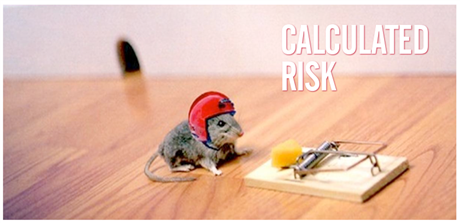
RISK!If you didn't catch it, the NYT magazine this weekend had a cover story on risk which posed the question, was management or specifically risk management more responsible for the current financial mess in which we now sit? Not unexpectedly, Mr. Black Swan himself got a good dose of coverage railing against the utter folly of VaR and seemingly anyone who attempts to quantify anything about risk in finance. The other corner is represented by the leadership at RiskMetrics, Sunguard, etc weighing in with the "calculating risk has benefits" position, given it (VaR) provides relevant and useful information the majority of the time. Taleb's point is the "majority of the time" doesn't matter much after insolvency.

Given the topic, the article provides predictable variations of common platitudes: "Guns (quantifying risk) don't kill people, people (dumb risk management) kill people," and "Those who ignore the lessons of history are bound to repeat it (particularly if you only use 2 years of data as a basis for your VaR calc)."

I couldn't help but notice how much the article echoes the debate about the degree of risk versus uncertainty present in financial management, and what to do about it. In fact, one way to look at the position of people like Taleb/Mandelbrot is that the uncertainty about which Dr. Knight wrote in his 1916 dissertation is really the driving force behind socio-economic variable movement and as such, if you're going to do any modeling, fractals are your best only choice. They argue fractals and power laws are the only things that give you a prayer of appreciating the potential magnitude out in the tails of the uncertainty.

I think the article properly highlighted one VaR shortcoming that has been reasonably well-known but under-addressed, "[VaR] failed to distinguish between leverage that came from long-term, fixed-rate debt…and loans that can be called at any time and…blow you up in 2 minutes." Coincidentally this is highly germane to my disagreement with Dr. Black, and perhaps even the mindset behind a lot of quant training.

I wish there was a bit on behavioral finance. The author hints at that quoting a risk manager, "It has to do with the human condition. People like to have one number they can believe in." It might've been nice if he touched on concepts like availability bias, overconfidence, and herding as additional contributors to the problem. What ramifications this all has for future policy is anyone's guess. In the end, we are still doing this democratic/capitalist experiment and it doesn't appear we're in any danger of getting it *right* anytime soon.

Of course, I'm sure some risk managers out there reveled in one of the author's concluding and resigned ruminations, "Maybe it would have been better if the people in charge had a better understanding of risk." I suppose that would've been nice.


All Posts